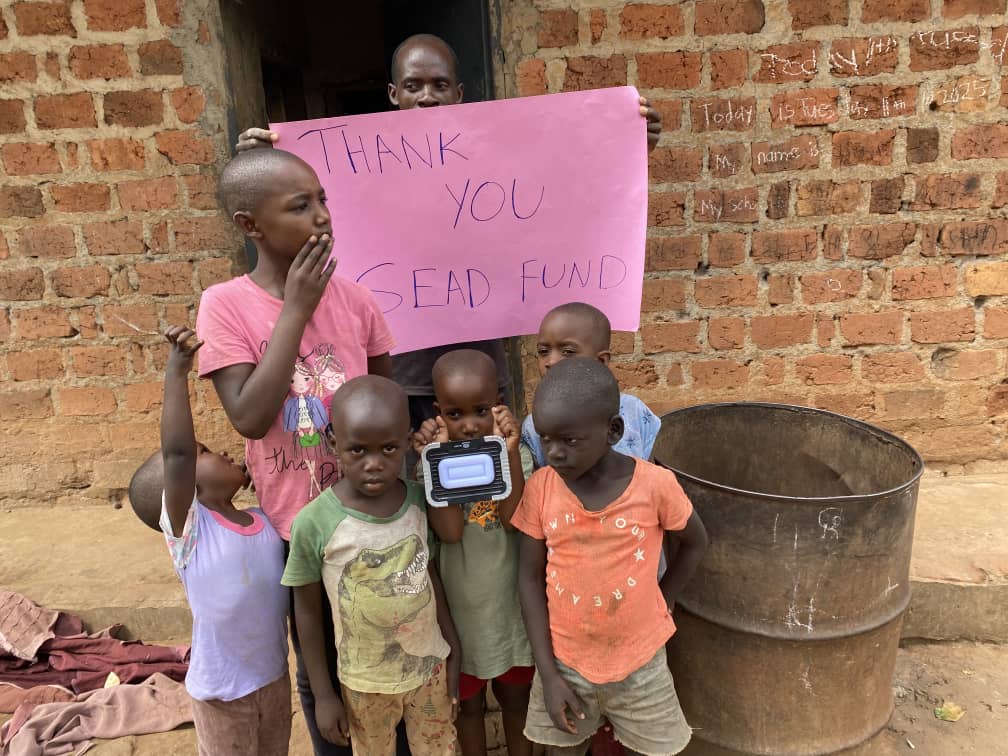
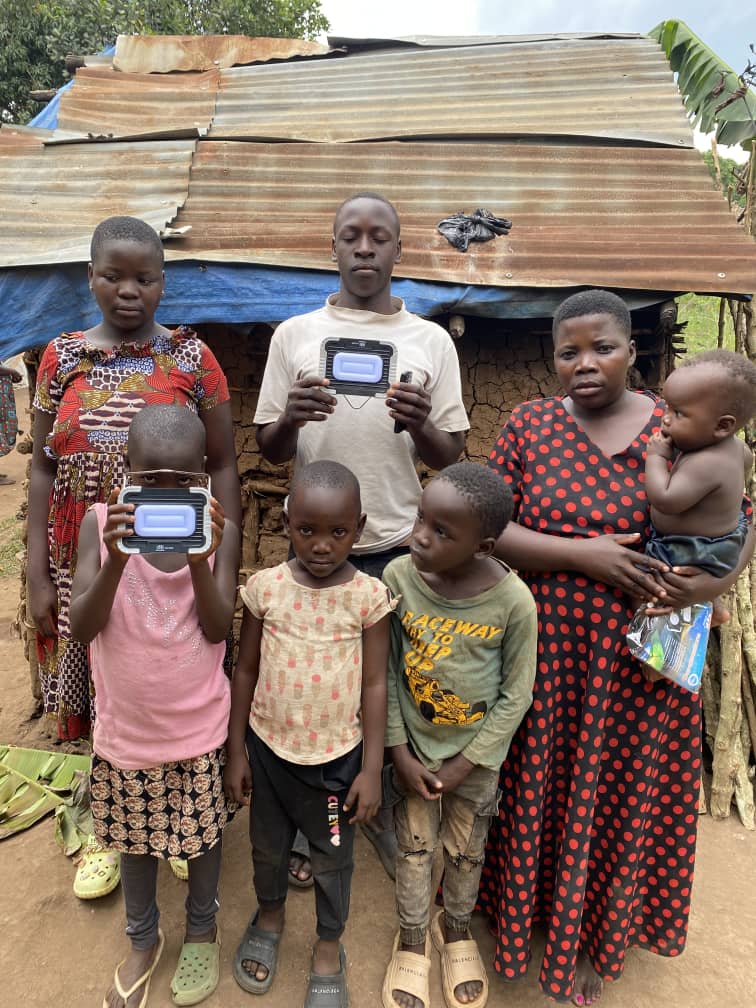
The Solar Light to Rural Children project, funded by SEAD Fund UK, successfully
provided portable solar-powered lighting systems to 125 households in three rural
villages (Kazinga, Bandwe, and Kikajjo) in Wakiso District, Uganda. The project directly
benefited approximately 400 children, enabling them to study after dark and improving
their educational outcomes. Additionally, the project included training sessions for
families on the use and maintenance of the solar kits and capacity-building for local
technicians to ensure sustainability.
During the implementation of the project, the team identified an additional challenge: the
lack of access to menstrual health products for girls in the community. This report
highlights the project's achievements, lessons learned, and the need for a follow-up
intervention to address menstrual health through the provision of reusable sanitary
pads.
- Provide 125 households (approximately 400 children) with access to reliable,
sustainable lighting for educational purposes.
- Improve academic performance and educational outcomes for the beneficiary
children.
- Build local capacity for solar technology maintenance and repair to ensure long-term
sustainability.
125 solar lighting kits were distributed, benefiting 400 children who can now
study after dark.
Teachers reported increased homework completion rates and improved test
scores among beneficiary students.
Households have significantly reduced their use of kerosene lamps, saving
money and reducing health and fire hazards.
Five local technicians were trained to provide ongoing maintenance and repair
services for the solar kits.PROJECT ACTIVITIES
- Distribution of Solar Lighting Kits.
- 125 portable solar lighting kits were distributed to households in Kazinga, Bandwe,
and Kikajjo villages.
- Each kit included a combined one unit of small solar panel, a rechargeable 5000 mAH
battery, and two LED lights capable of providing up to 8 hours of illumination per day.
- Training and Capacity Building.
- Training sessions were conducted for beneficiary families on the proper use and
maintenance of the solar kits.
- Five local technicians were trained to provide technical support and repair services,
ensuring the sustainability of the project.
- Educational Component.
- Partnered with local schools to develop learning materials that leverage the new
lighting access to improve student outcomes in math, science, and reading.
- Conducted awareness sessions on the benefits of solar energy and its impact on
education.
My name is Kato Musa, and I am 12 years old. Before we received the solar light, I used
to study by the light of a kerosene lamp, which made my eyes hurt and gave me
headaches. Sometimes, I couldn't finish my homework because the lamp ran out of fuel.
Now, with the solar light, I can study every evening without any problems. My grades
have improved, and I feel more confident in class. Thank you for giving me this
opportunity to learn and grow."
My name is Nalongo kibojja, and I am a mother of four children. The solar light has
made a big difference in our home. My children can now study in the evenings, and I no longer have to spend money on kerosene. However, my eldest daughter often misses
school during her menstrual cycle because we cannot afford sanitary pads. I hope that
one day she can have access to reusable pads so she can stay in school and achieve
her dreams.
Challenges
- Limited funding delayed the distribution of additional solar kits to more households.
- The lack of menstrual health products emerged as a critical issue during community
engagement.
Lessons Learned
- Community involvement is crucial for the success and sustainability of development
projects.
- Addressing one challenge often reveals other underlying issues, such as menstrual
health, that require attention.
The Solar Light to Rural Children project has significantly improved the lives of 400
children by providing them with access to sustainable lighting for studying. However, the
identification of menstrual health as a critical challenge highlights the need for a follow-
up intervention.
During the implementation of the project, the team identified a significant challenge
affecting girls in the community: the lack of access to menstrual health products. Many
girls miss school during their menstrual cycles due to the inability to afford sanitary
pads, which negatively impacts their education and overall well-being.
4.1 Need for Reusable Sanitary Pads.
To address this challenge, there is an urgent need to provide reusable sanitary pads,
which are cost-effective, environmentally friendly, and sustainable. A follow-up project is
proposed to:
- Distribute reusable sanitary pads to girls in the community.
- Conduct training on menstrual health and hygiene.
- Establish a local production unit for reusable pads to ensure long-term sustainability.
- Implement a follow-up project to address menstrual health through the distribution of
reusable sanitary pads and training on menstrual hygiene.
- Establish a local production unit for reusable pads to ensure sustainability and create
income-generating opportunities for women.
- Continue monitoring and evaluating the impact of the solar lighting kits to ensure
long-term benefits.
Prepared by:
NAMAKULA AISHA
DIRECTOR Nurture Abato Initiative
ACKNOWLEDGMENTS:
We extend our heartfelt gratitude to SEAD Fund UK for their generous support and
commitment to improving the lives of rural children in Wakiso District, Uganda.